A Wee Pinch of Sugar

My Ideas, My inspirations, My food

  • Home
  • About
  • FOOD
    • Food News
    • Scottish Food
    • Soups & Starters
    • Meat & Poultry
    • Fish
    • Vegetarian
    • Dessert
    • Seasonal
  • Gardening
    • Herbs
  • Books
  • Contact

What’s in your takeaway? Some words on food fraud and a recipe for a healthy lamb kebab

April 18, 2014 By Rachel Leave a Comment

Another week, another food scandal and does it come as any great surprise that the lamb in your takeaway might not what it says on the label. I’d say not really, it’s another scandal in the country’s food industry that’s been plagued by fraud.  60 Samples of lamb dishes obtained from takeaways in London and Birmingham revealed 24 mixed with other meat, 7 of which contained only beef. And, the shocking thing is that the price for this cheap adulterated food is anything but cheap when passed on to the customer. Looking at the  menu for a Glasgow takeaway restaurant, it can cost anything from £4 for a donner kebab, with customers paying up to more than £8 for a mixed kebab. Given this latest scandal, perhaps the label of mixed kebab is more appropriate and obviously you can charge more for that! Multiply that by two or three and it’s an expensive family meal.

Regardless of what action the Government’s Food Standards Agency  plan, as they once again insist they are cracking down on food fraud, there is a more powerful solution. The consumer, the customer, the one who is paying for this seemingly growing fraudulent industry. Why we are prepared to pay for this, never mind eat it is beyond me, but what we can do is become part of a change. Last week I heard Philip Lymberry CEO of Compassion in World Farming comment during the ‘Politics in Food session in Glasgow,  that ‘food chain is under constant attack and we need to meet it with resistance’. The more small changes we all make is what will help that change.  He also said, ‘The revolution in food will come through evolutionery steps’.  

If  being part of that revolution appeals, there’s an easy place to start, cook your own food with fresh ingredients. Food that you can identify and know where it comes from. Not that difficult but everytime I champion this I receive numerous comments, not about being unable to cook but that people don’t have time to cook. Well, sticking my neck out again, that doesn’t wash with me. A healthy meal, especially a kebab can be cooked quicker than the time it will take to organise a takeaway. And on the cooking,  believe me it’s not rocket science, if you can’t cook, it’s possible to learn, even on a very tight budget.

To help you out, I’m sharing the kebab recipe I started making when my sons left home for university and thought that happiness was a donner kebab. It’s quick and easy to make and if time is a problem the meat can be left marinating in the fridge overnight.

A healthy home cooked kebab that beats any takeaway

A healthy home cooked kebab that beats any takeaway

This version is much healthier than any takeaway and can be made with any meat although I usually use lamb leg steaks, and serve on a large round pitta with salad, red onion, tomatoes, raita and a chili sauce.

Lamb kebab. Approx 6 lamb leg steak,  4 tsp Harissa paste- I use Belazu Rose Harissa, 2 tbsp oil – I tend to use rapeseed although olive will be fine.

Place the lamb steaks in a plastic bag , mix the Harissa and oil together and add to the lamb, mix well and leave to marinade either overnight or for a few hours.
When ready to cook, heat a griddle or grill and cook steak for approx 4 minutes each side or to your liking. When cooked serve on pita bread with the accompaniments.

An easy meal for all the family

An easy meal for all the family

Accompaniments.

Pitta bread…the large round pitta bread from Warburtons are ideal as you can lay kebab on top and fold.
Chopped tomatoes
Sliced red onion
Shredded lettuce

Chili sauce. 250ml Natural yogurt, 100 ml tomato ketchup, 1 tsp chili powder, 1tsp mint sauce. Add ingredients to bowl and mix together.

Raita. 250ml Natural yoghurt, half a cucumber-chopped, 1 tbsp chopped fresh mint, half Tsp ground roasted cumin seeds, pinch of cayenne pepper, Salt and pepper. Add ingredients to  a bowl and mix together.


Filed Under: Meat & Poultry, Recipes

My ‘Nose to Tail’ project from ‘The Whole Cow’. Corned Beef

April 3, 2014 By Rachel Leave a Comment

5 cow collage

I felt quite adventurous with the next recipe in my ‘nose to tail’ project, cooking every dish in Chef and author Christopher Trotter’s ‘The Whole Cow’ book‘. I decided to make corned beef, a dish I’ve never cooked, but the recipe looked quite straightforward and my local butcher, Drew, shared some of his tips, as well as providing me with a nice looking piece of brisket.

book

My early memories of corned beef are those square tins with the key and  dinner of what we called corned beef hash, really a mash as it was simply chopped corned beef mixed with mashed potatoes. In some places that’s called Stovies as I discovered when I was in Fife recently. This dish had fried onions and corned beef mixed through the mashed potatoes.

There’s an interesting chapter on preserved beef in the The Whole Cow and it gives an insight into the history of preserving meat – ” Salt acts as a preservative by drawing out the moisture: this stops  bacteria and moulds from growing because they need water to survive. There are two main methods of salting: rubbing with dry salt or soaking in brine, either of which may take a few days or several weeks”.

“Corned beef and the modern English term ‘salt beef’ are interchangeable, ‘corn’ being an old English word for any grain, including grains of salt. The classic recipe uses brisket or silverside (outside or bottom round), kept in a nice spiced brine for up to two weeks, the resulting meat is usually simmered with onions, carrots and bay leaves, until tender enough to cut with a fork. It’s the basis for the traditional English ‘boiled beef and carrots’, North America’s New England boiled dinner and the Irish- American corned beef and cabbage”.

The first stage was to brine the meat and the recipe advises soaking for at least 2 days or up to 7. As it was my first attempt, I decided to go around halfway and brined for almost 4 days. The brining was a simple process, make the salt cure, allow to cool and soak the meat for 2 days.

Brining collage 2

Brine. 2 litres cold water, 300g coarse sea salt, 200g coarse brown or granulated sugar, 2 bay leaves, 3 juniper berries, 1/2 tsp saltpetre (optional)

Put all the ingredients into a large pan and bring to the boil, stirring to dissolve the salt and sugar, then leave until cold. Put the meat  in a deep non reactive bowl and pour over the cold brine. Leave for at least 2 days, or up to 7

The brine can be used for many other types of meat and Christopher  also uses it for ox tongue, pork belly and breast of veal.

Cooking the corned beef was also a simple process, involving a few extra ingredients. 2 carrots, 1 onion studded with 8 cloves, base of a head of celery, 1 head of garlic, cut in half horizontally, bay leaf, thyme and rosemary.

Soak the brined beef in fresh cold water for about 2 hours. Put into a deep pan, cover with cold water, slowly bring to the boil and skim off the grey scum. Add the rest of the ingredients and reduce to a gentle simmer, partially cover and cook for 3 hours or until tender. Leave the cooked meat in it’s cooking liquid to cool slightly and then remove from the pan.

I was delighted with my effort. The beef was tender with subtle lingering  flavours of the herbs and spices. Christopher suggests slicing and serving hot with boiled potatoes and mustard or thinly slice for a sandwich, on rye bead with pickles and/or mustard.

corned beef

The cooked corned beef can also be used to make Potted beef, a Scottish speciality sold in most butcher shops. The recipe in ‘The Whole Cow’ includes prunes, which is Christopher’s own take on the recipe, added after a cooking session with a chef  friend.

Potted Beef.  400g freshly cooked corned beef, with it’s cooking liquid, salt and pepper, 10 stoneless ready to eat prunes, ideally Agen, roughly chopped.

Leave the cooked corned beef in it’s cooking liquid to cool slightly, then remove from the pan. Simmer steadily to reduce the cooking liquid by half and then leave to cool.

Chop the beef into small chunks, mixing fat and lean meat, season with salt ( take care if you have brined for a long time) and black pepper.

potted beef

Mix the prunes and add a little of the cooled stock, just enough to moisten ( about 4 tbsp) and then cram into an earthenware crock pot or bowl, cover and place in the fridge. It is best left for at least 48 hours and will keep happily for up to a week.

Like the corned beef, the potted beef was devoured by the Gillon boys before I could take a picture of the dish. It was a delicious and they enjoyed it with toast and chutney. The serving suggestion from Christopher is to serve from the dish with toast salad and piccalilli, but any tangy salsa will go well.

About the author. Christopher Trotter is a freelance chef and food writer, restaurant inspector and food consultant. As Fife’s Food Ambassador, he organises bespoke food tours around Scotland as well as running cookery classes. He is the author of several books, including the whole hog, Scottish Heritage Food and Cooking with Carol Wilson and the National Trust for Scotland’s The Scottish Kitchen  Follow hin on twitter – @CTScotfood or Facebook– /CTSCOTFOOD

ARTWORK – Thank you to Alice Strange for permission to reproduce the ‘cow’ artwork. A full selection of her work can be viewed on her website.


Filed Under: Meat & Poultry, Recipes

The latest veg bag tales on A Wee Pinch of Sugar

March 31, 2014 By Rachel Leave a Comment

veg bag header


Last weeks bag with courgettes and aubergines gave me a lift, there was a feeling of changing seasons. This week, with little sunshine and more dull days, the veg bag arrived with cauliflower and celeriac and although courgettes had appeared again, I felt a longing need to see the end of the hearty root veg. March is that kind of month,stuck between Winter and Spring.

It had been a slightly quieter week in the kitchen and there was still  a few veg from the previous bag to use up. But with a busy weekend looming, and a lot of mouths to feed it was soon used up.

The week saw the end of the Sport Relief charity event and friend Ellen Arnison over at In a bun dance, was taking part in the adventurous and sporty Team Honk Relay. Being way too energetic for me, I offered to make food to sustain them through some of the Scottish parts of the relay. With an uncompromising weather forecast and the team planning to raft in Perthshire on the Saturday, warm hearty, easy to eat comfort food was the order of the day. A very large pot of lentil soup ticked that box and used up a fair amount of the carrots onions and celery, but thankfully it did the trick for warming up some very cold and wet rafters. My mother and I always disagree over the recipe for lentil soup as she adds leeks and I don’t. She also finely grates her carrots and I chop mine. It’s been the subject of many a discussion but that’s the way I prefer to make my lentil soup.

Lentil soup

This amount will serve around 4. Large ham hough, onion, carrot and any other leftover veg/herbs for stock. 1 litre of water. 8oz red lentils, 1-2 tbsp oil, 2 Onions chopped, 2 celery sticks chopped, 2 large carrots chopped, Bouquet garni of parsley, thyme and bay leaves.

PicMonkey Collage green

Make the stock by adding the ham hough, water and the stock veg/herbs to a large pan. Slowly bring to the boil, skimming off any scum. Simmer for approx 90 minutes. Strain the stock and then return to the pan with the lentils and continue simmering for approximately 10 minutes. Add the remaining vegetables and continue cooking for approx 15 minutes until the lentils and vegetables are cooked. Blend to a smooth consistency. Shred the meat from the ham hough and add to the soup.

The second soup for the week was Celeriac and Spinach. Another one of my ‘green’ soups and also very tasty and nutritious.

1tbsp oil, 1 onion chopped, 1 small celeriac chopped, 750 ml stock – vegetable or chicken, herbs – I used bay leaf and a sprig of thyme,  2 large handfuls of spinach

Heat the oil in a pan and sweat the onion. Add the celeriac, cook for 1 minute and add the stock and herbs. Simmer for approx 15 minutes. Once cooked added the spinach, allow to wilt and blend to a smooth consistency.


Spicy Prawn & Veg Noodles

This is one of those recipes that works well with a variety of vegetables and as usual, I used what was in the veg basket. Other vegetables such as mushrooms, mangetout, green beans, celery, sweetcorn and peppers will work equally well. The prawns can be replaced with chicken or serve without meat as a vegetarian dish.

Quick and easy, healthy veg and noodles

Quick and easy, healthy veg and noodles


1-2 tbsp rapeseed oil, 2 tsp grated root ginger, 1 garlic clove, crushed, 1 red chilli, chopped, 1 courgette, sliced, 1 large carrot, sliced into thin sticks, half of a small head of broccoli, broken into small florets,  3 tbsp soy sauce, tbsp sherry or Chinese cooking wine, small amount of vegetable stock (if required)   4 oz cooked prawns, 2-3 nests of egg noodles. To serve, freshly chopped coriander.

Heat the oil in a wok or a large saute pan, add the ginger, garlic and chilli and cook for 1 minute. Add the remainder of the veg and stir fry for 5 minutes. Add the prawns and heat through.  While the veg are cooking, cook the noodles according to the instructions on the packet. Drain and toss with the cooked veg and prawns, add the soy sauce, sherry and if required a small amount of vegetable stock. Serve sprinkled with freshly chopped corriander.


Pasta with courgettes and sun dried tomato pesto

This is another dish that was born out of what was in the fridge and it was packed full of flavour from the pesto and the goats cheese. The pesto had been made for the Team Honk sandwiches  with about 12 sun dried tomatoes, a small bunch of basil, 2 oz grated Parmesan,  2 oz pine nuts and seasoning. Any type of pesto from a jar will also work well.

Courgette and red pesto pasta

Courgette and red pesto pasta

8oz of dried pasta, 1 tbsp oil, 3 shallots, finely chopped, 1 large courgette, approx 150g sun dried tomato pesto, 10 olives sliced, 100ml vegetable stock, approx 4 oz goats chopped cheese,  ( I used Dunlop Dairy, Bonnet, a hard goats cheese). handful of basil leaves.

Cook the pasta according to the instructions on the packet. In a large pan, heat the oil and saute the shallots for 1 minute. Add the courgette, cook for 2-3 minutes until slightly golden. Stir in the pesto, olives and a small amount of stock if required and  heat through. Add the pasta to the sauce and mix well. Transfer to an oven proof dish, scatter over the goats cheese and brown under a hot grill. serve scattered with basil leaves.


Spicy Rice with Cauliflower and Chicken

The cauliflower was a good addition to this quick and easy spicy chicken rice, made with leftover cooked chicken I had used  in the sandwiches for  Team Honk.

Spicy rice with cauliflower and chicken

Spicy rice with cauliflower and chicken


Serves 4. Long grain or basmati rice, measured to the 14oz Mark in a measuring jug. Add the rice to a pan with 500ml cold water and a pinch of salt. Bring to the boil, turn to a low setting and cook for approx 10 minutes until the rice cooked and the water has been absorbed. Set aside.

1 onion chopped, 1 garlic clove crushed, heaped tablespoon of curry paste, heaped tablespoon of tomato ketchup, 250-300ml chicken stock, small cauliflower broken into small florets. Approx 8 oz leftover cooked chicken, or any leftover cooked meat. Sprinkle with freshly chopped coriander and serve with mango chutney on the side.

Heat the oil in a large sauté pan, add the onion, cook for 2-3 minutes until soft. Add the garlic, cook for a further minute, add the curry paste, tomato ketchup and 250 ml of the stock and mix well. Add the cauliflower and continue cooking until it starts to soften. Add the cooked chicken, continue cooking until the chicken is piping hot and if needed add the remaining stock. Sprinkle with freshly chopped coriander and serve with mango chutney on the side.

Carrot and raisin cookies

I also had time to bake the carrot and raisin cake/cookies from the  Bellfield Organics newsletter, featured in last weeks post. I opted to bake the cookies and they were delicious.

Carrot and raisin cookies - the recipe can also be used make a cake

Carrot and raisin cookies – the recipe can also be used make a cake


Filed Under: Vegetarian

When the cupboards are almost bare….tomato soup

March 26, 2014 By Rachel Leave a Comment

It’s Wednesday,  that means it’s veg bag delivery day and it also means the cupboards are almost bare. No carrots, leeks or celery for soup, but what I do seem to have a lot of, is tomatoes, leftover from the boys visit at the weekend, when they were in charge of the kitchen.

Tomatoes, along with a few other ingredients, make such a great soup and a very quick delicious  lunch. It’s also a nice change from some of the more robust winter soups I’ve been cooking recently. Roasting the tomatoes along with herbs makes them beautifully sweet and a lovely rich healthy soup.

… 

Read More »

Filed Under: Soups & Starters

Tales from the kitchen and the organic veg bag

March 19, 2014 By Rachel Leave a Comment

The veg bag contributed to breakfast, lunches and dinners this week with the added goodie bag  making my cooking week slightly more challenging than usual.

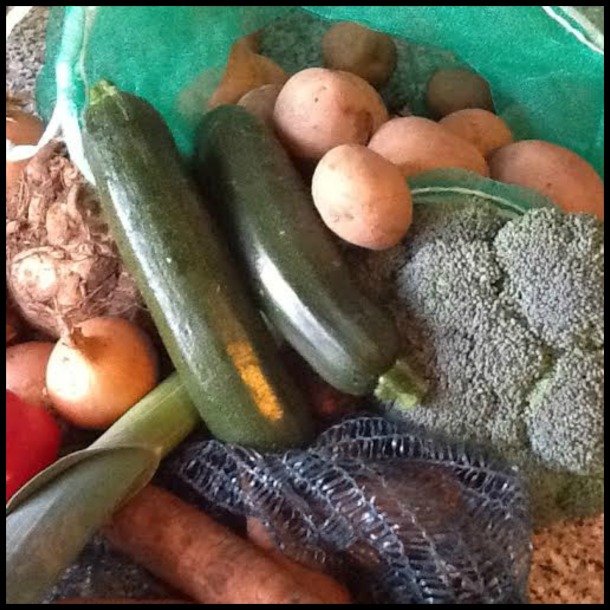
There seemed to be a mountain of veg for cooking, along with a few leftover parsnips from the previous week.  It was a great selection though, broccoli, squash, celery, red pepper, aubergine, avocado, Jerusalem artichoke, tomatoes, portobello mushrooms, grapefruits and the staples, potatoes, onion and carrots. 

veg bag 5

A simple but tasty breakfast was scrambled egg mixed with sautéed chopped cherry tomatoes, served with homemade toasted bread. Always a nice way to use tomatoes, especially during the colder weather.

breakfast collage

The two portobello mushrooms and the remainder of the cherry tomatoes were earmarked for  ringing the changes with Sunday breakfast.  The mushrooms were drizzled with garlic flavoured rapeseed oil and cooked in a hot oven for 10 -15 minutes. Cherry tomatoes were chopped and sautéed along with some chopped bacon, haggis and Lorne sausage. Chopped spring onion was added and the portobello mushrooms filled with the mixture. To finish, I topped with a soft poached egg, sprinkled with parsley. And served on top of a potato scone. All the flavours of a full Scottish breakfast and absolutely delicious.

Four soups were made, three of which were parsnip and apple with marigold petal garam masala, pea & ham and broccoli with Parmesan.

Parsnip & apple, pea & ham and Broccoli with parmesan

Parsnip & apple, pea & ham and Broccoli with parmesan

A fourth should have been carrot and coriander but for some strange reason my mother used a bunch of mint instead of coriander! It’s a long story but nevertheless the soup tasted fine.

Broccoli is a favourite with the family so there’s no such thing as too much and the two heads in the bag were put to good use.  Some  was added to a macaroni and cheese along with a small piece of cauliflower and that made a really dinner. Nothing complicated, cheese sauce added to cooked macaroni with veg mixed through.

It was also on the menu with the Sunday dinner of venison olives. For something different, the broccoli was lightly steamed, topped with a mixture of fried breadcrumbs, bacon and cheese and browned under a hot grill. A really nice strong flavoured dish and an excellent accompaniment to the venison.

broccoli collage

A Creamy salmon pasta used the the last of the broccoli and it was very tasty. The sauce was made by blitzing  200g cream cheese, 2 tbsp lemon juice, 6 sun dried tomatoes (use sun dried tomato paste as an alternative)  and about 10 olives (optional) with salt and pepper in the processor. Before cooking the pasta, I cooked 2 salmon steaks in a steamer and when they were cooked added the pasta to the water, with the broccoli being added for the final 5 minutes of cooking. Gently heat the blended ingredients in large pan with approx 300ml milk and when ready to serve add cooked pasta, salmon and mix well. Served scattered with chopped parsley.

Avocados are a great favourite of mine  and I will happily eat a whole one all to myself. However, this week I shared, and made guacamole as a side for chilli con carne.

guacamole collage 2

There are many recipes for guacamole but I like the avocado to be the dominant flavour and simply mash and mix with some finely chopped spring or red onion, a small crushed garlic clove, some freshly squeezed lime juiced. Season with salt and freshly ground black pepper.

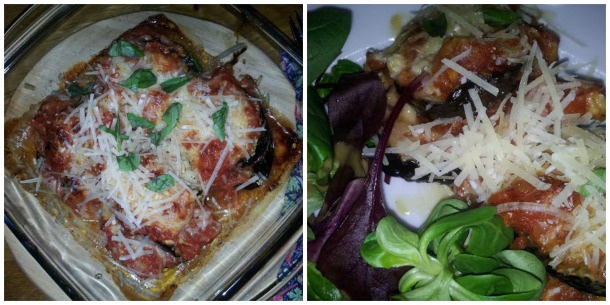
With the onset of Spring it was wonderful to see an aubergine and courgettes in the bag, and I found myself yearning for sunnier climes and warmer weather. Food, how it looks and smells can magically transport you elsewhere and Italian food does that so well.With that in mind I decided to make eggplant Parmigiana using the aubergine and 3 large plum tomatoes that were rolling around the fridge drawer.

Egg plant collage

The aubergine was thickly sliced, brushed with garlic infused rapeseed oil and roasted in a hot oven for 15 minutes. While that was cooking, the tomatoes were chopped and cooked in a small amount of oil, along with a large clove of chopped garlic, for about 10-15 minutes. In a small oven proof dish, I then layered the aubergine and tomatoes (2 layers) along with grated Parmesan cheese, seasoned with freshly ground black pepper, in a small oven proof dish. It was popped back in the oven for another 15 minutes until the cheese had melted and the sauce was bubbling. This made a delicious vegetarian meal, served with salad and crusty bread.

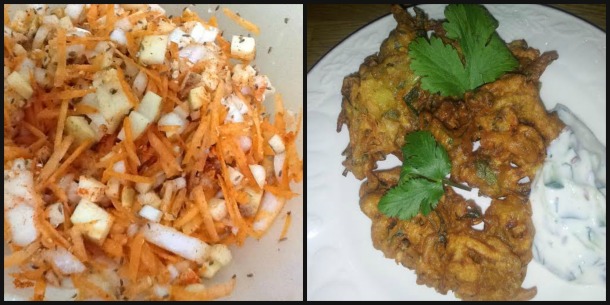
The kg of carrots in the bag usually disappears quite quickly, mostly served as a vegetable or used in soups. This week, grated carrot made an appearance in the vegetable pakora recipe, alongside potato and spinach. It made a nice change and is a good way of adding extra hidden veg to recipes.

pakora collage

Jerusalem artichokes are one of those vegetables that many people stay clear of and I have to admit, I was one of them, until the arrival of the veg bag. My friend, Fiona at Rumblie B&B makes Jerusalem and carrot soup for her guests and last year I followed her recommendation. Determined to do something different this year, I spent an hour on the sofa, looking for inspiration with Nigel Slater. Not the real person, you understand, but his book ‘Tender V2’, which has a lovely interesting section on these little earthy vegetables. I’ve decided on a casserole of artichokes and pork and that will be Friday night’s dinner.

I’ve got plans for the squash and the courgettes and the recipes will be in next week’s post.

The recipe on this week’s Bellfield Organics newsletter is carrot and raisin cake or cookies. A wee sweet treat for afternoon tea and I’m planning to make these for the weekend.

This spicy dough mix can equally be used to make cookies, in which case, drop heaped tablespoons of dough on to a lightly greased baking tray, 5cm apart and bake for 12-15 minutes until golden brown.

Cake
Author: rachelgillon
Ingredients
  • 150g plain flour
  • 2tsp baking powder
  • 1 tsp cinnamon
  • Pinch of salt
  • 2 heaped tablespoons seedless raisins
  • 100g carrots grated
  • Grated zest of half an orange
  • 2tbsp orange juice
  • 100g butter
  • 125g Brown sugar
  • 2 large eggs
Instructions
  1. Sift the flour, baking powder, spices and salt I to a large bowl.
  2. Mix the raisins, carrots, orange zest and juice and set aside.
  3. In a food mixer, cream the butter and sugar until light and fluffy.
  4. On a slow speed, add the eggs, one at a time.
  5. Combine the batter with the flour and carrot mixtures and mix well.
  6. Pour into a greased and lined 20cm tin and bake in a preheated oven,180oc/Gas4 for 40-60 mins.
  7. Test with a skewer to ensure the cake is cooked and allow to cool in the tin for 15 mins, before turning out on a wire rack.
3.2.1303


Filed Under: Vegetarian

Minestrone Soup

March 19, 2014 By Rachel Leave a Comment

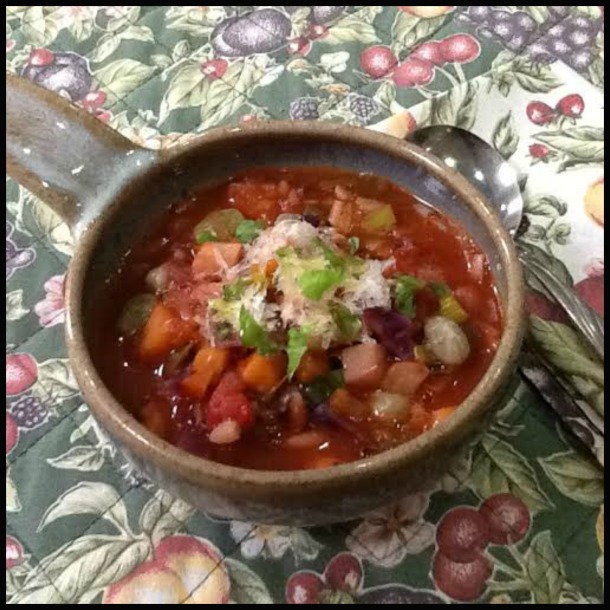
This morning’s  blustery walk along the river front  with the dogs,  left me cold, hungry, and in much need of a bowl of hot soup. It’s on day like this, I’m thankful for one of the single portions I keep in the freezer and this minestrone soup is just the ticket.

My minestrone soups are never the same as you’ll see from the recipe on last weeks organic veg bag post. This soup was made with the vegetables I had left in the basket, and  if you have any leftover cooked vegetables add them in at the end. It’s the kind of soup that you can squeeze so many different types of vegetables into. What’s in season or what you have leftover will never go wrong in minestrone soup. It’s a real powerhouse of nutrition. Don’t overcook the vegetables, that way the nutritional benefits are retained, remember  ‘you are what you eat’.

Other vegetables such as parsnips, celeriac, potatoes, sweet potatoes will work just as well. Sometimes I add frozen beans or peas and in summer, there’s courgettes and peppers as usually there’s a plentiful cheap supply.

With the addition of the pasta in minestrone along with some crusty bread on the side, you have a really nourishing, meal, bursting full of flavour.

Minestrone soup. A powerhouse of nutrition

Minestrone soup. A powerhouse of nutrition

Minestrone Soup
Author: rachelgillon
Ingredients
  • 1 tablespoon oil. (I use rapeseed)
  • 1 onion chopped
  • 1 leek chopped
  • 4 rashers of bacon ( use vegetable stock cubes if you prefer a meat free stock)
  • 2 cloves of garlic – crushed
  • 2 carrots chopped
  • 1 celery stick – chopped
  • Small piece of turnip chopped
  • 400g tin of tomatoes
  • 1litre of water or stock
  • 1 teaspoon of dried mixed or Italian herbs.
  • 100g frozen peas or broad beans
  • 150g pasta
Instructions
  1. Heat the oil over a medium heat. Add the onion and leek and gently cook for 5 minutes. Add the garlic & bacon (if using) and continue cooking for 2 minutes.
  2. Add the turnip, carrots, celery, turnip, and continue cooking for 1 minute.
  3. Add the tin of tomatoes, the herbs, along with the water or stock and simmer gently for 15 minutes.
  4. Stir in the pasta and continue simmering for approximately 8 -10 minutes. When the pasta is almost cooked, stir in the peas or beans and cook for 3 – 4 minutes.
Notes
To Serve.[br]Delicious served with a sprinkling of grated Parmesan or Cheddar and black pepper.
3.2.1303


Filed Under: Recipes, Soups & Starters

In the veg bag this week

March 11, 2014 By Rachel Leave a Comment

The veg bag kept me busy this week and with the family being home for the weekend there was a demand for plenty of food.  The selection of vegetables was good and with the appearance of courgettes and a pepper, I started to feel that spring was not too far away.  The usual potatoes, onions and carrots were there, along with more celeriac and leeks. There was also a lovely big piece of broccoli and it will be nice roasted a long with some herbs  and a few bits of cauliflower that are lurking in the fridge. Unfortunately there was no recipe on this weeks newsletter as there was so much news from Derek about what was happening on the farm.

veg bag 2nd post

Soup featured high on the lunches list and there was plenty of veg to chose from. First was  a minestrone soup that was packed full of veg and I also added some frozen baby broad beans and 2 rinds from Parmesan cheese for extra flavour. In Summer I usually add peppers and courgettes to minestrone but this week I had other plans for these bright cheery additions.

Minestrone soup

minestrone

1-2 tbsp oil

1 onion chopped

2 cloves garlic crushed

2 celery sticks chopped

1 leek chopped

3 small carrots chopped

1 large parsnip chopped

Half small celeriac chopped

400g tinned tomatoes – or any leftover fresh tomatoes

1 litre of stock – vegetable or ham works well

2 Bay leaves

Sprig thyme – use dried herbs if no fresh

Sprig Rosemary

Parmesan rind (optional, I keep the rinds for adding to soup)

Seasoning

3 oz of any pasta.

Heat the oil in a large pan, add the onion and garlic and cook gently for 5 minutes. Add the remainder of the vegetables and sweat gently for a few minutes. Add the tomatoes, stock, herbs, seasoning and Parmesan rind if using. Bring to the boil, reduce the heat and simmer for 15 minutes. Add the pasta and cook until a la dente. Serve sprinkled with grated Parmesan.

Roasted Veg Pasta with artichoke paste

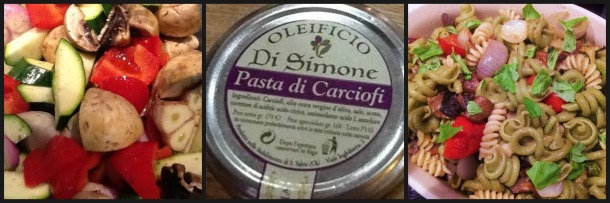
The courgettes and peppers  were chopped into bite size pieces and roasted along with  shallots and half a head of garlic before being mixed with cooked pasta and coated with a delicious artichoke paste. The paste I used, came from Soralina UK , a small independent company who source their products directly from the producer in Abruzzio, Italy. This made a really quick and economical meal and was served simply with crusty bread.

pasta soralina 2

Put the vegetable in a large bowl, drizzle with olive or rapeseed oil and roast in a hot oven for 15 to 20 minutes. Cook pasta as directed, drain and mix with the roasted vegetables a paste, sauce or pesto of your choice. Serve,scattered with fresh basil leaves and grated Parmesan.

Fish pie topping

Celeriac was in the bag again this week an apart from using it in soup I tend to mash it through potatoes. Normally when I make fish pie, I make a potato and swede topping, but this week I used the celeriac, and it really worked well with potatoes on top the fish pie. Unfortunately the picture of the fish pie does not look very appetising but suffice to say it was delicious.

fish pie

French Onion Soup

One of my favourite soups is French onion soup although admittedly I’ve never made it. There was no time like the present as my butcher had given me some beef bones and the vegetable basket was groaning with onions.

I simmered the bones for around 7 hours, along with carrot, onion, bay leaves and tarragon and that made a lovely rich stock. While it was cooking I was chatting with a friend and he suggested roasting the bones with some onions first as that produces a darker stock. Next time!

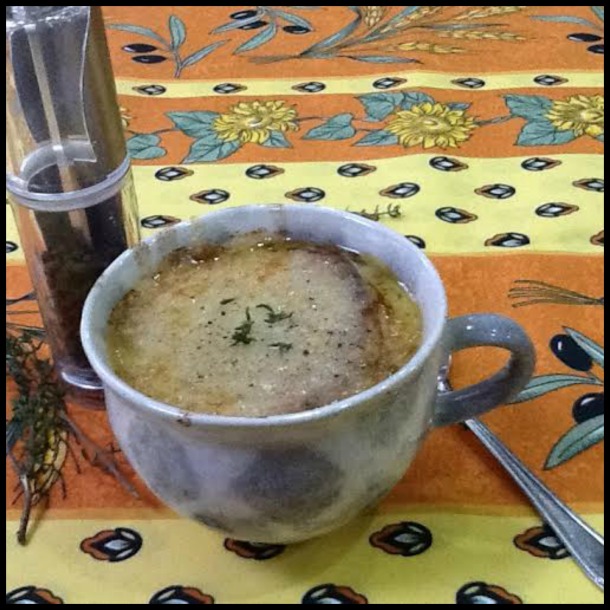
I found several recipes for French onion soup but decided to use James Martin’s from his book ‘Slow’. The soup was easy to make, 1.5kg of  onions were sliced and cooked for 45 minutes, producing nice soft, golden coloured onions. Garlic was added along with sherry and wine, followed by the stock and cooked for another 40 minutes The traditional way to serve the soup is topped with a bread crouton topped with Gruyere cheese but I used Ayrshire Dunlop cheese, as that’s what I had in the fridge.

soup

Spicy food

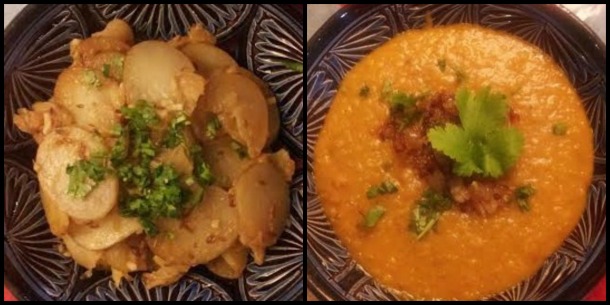
I had been sent some spice mixes by House of Spice and I made the 2 dishes to accompany our curry on Saturday night. I’ll be writing about the mixes in a separate post but the 2 dishes, Bombay potatoes and Tarka dhal went well with the curry, using up some more potatoes and onions.

spicy dishes

The newsletter from Bellfield Organics gives details of all the veg that will be available for the bags in the following week, and usually I’m content to take whatever is delivered.  However, for a change of flavours I’ve asked for celeriac and parsnips to be replaced with other veg such as cabbage, Beetroot, pak choi, kale, or swede.  I’ve also asked for a ‘goodie bag’ this week, meaning that there will hopefully be a few surprises for cooking up.

Further info

www.bellfield-organics.com

www.soralina.com

Filed Under: Vegetarian

The Organic Veg Bag

March 5, 2014 By Rachel Leave a Comment

I’ve decided to add a new section to ‘A Wee Pinch of Sugar’ – The organic veg bag. My delivery arrives on a Wednesday from Bellfield Organics and I  just love having a rummage, thinking about what I’ll be cooking  in the week ahead.  It’s all Scottish seasonal ingredients and although I usually have a general idea of what it contains,  occasionally there’s a surprise that I wasn’t expecting, maybe signalling a welcome change in the seasons.  There’s also a great wee weekly newsletter, apparently very popular with Bellfield customers, with news of what’s happening on the farm at Bellfield and  a recipe, always handy if my cooking imagination has dried up.

Root veg such as parsnips, carrots, celeriac and swede are regulars in the current Winter bags, but it’s  also great when gems such as purple sprouting broccoli, kale and beetroot make an appearance. All of these fit well with my cooking at this time of year as I tend to slow cook, meaty casseroles and lots of soups.

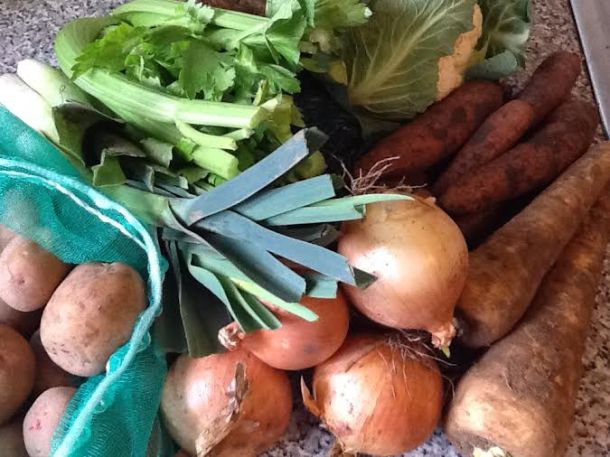
veg bag feb

Last weeks bag had my regular potatoes, carrots & onions with cauliflower, leeks, celeriac, parsnips and celery as the seasonal veg. I usually make soup every day and if it’s one of those quiet  weeks of solo dining then I’ll make a few dishes for the freezer. Celeriac and parsnips are great for those dishes and I usually make a vegetable mash using parsnips, carrots and swede or celeriac and sweet potato. These freeze really well and when I’m reheating, a topping of breadcrumbs, cheese and herbs gives a great crunchy topping

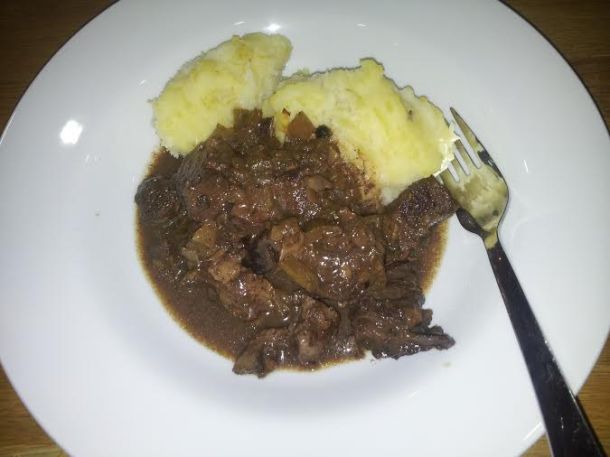
Celeriac is a real favourite of mine and I like to use it for soups such as celeriac and leek, or celeriac,spinach and potato. Mashing celeriac with potatoes is a great way of adding extra flavour and an extra vegetable to a meal. This is what I did to accompany this shin of beef recipe and the additional flavour of the celeriac worked really well with the overall dish. This shin of beef recipe can be found in the first of ‘ The Whole Cow’ recipes. (Feb post)

dinner


Celeriac & Leek soup

veg bag end feb

2 tbsp oil

I small onion chopped

I leek chopped

1 medium celeriac chopped

1 carrot topped tailed and left whole (I leave the carrot whole as it is reported to be more nutritious)

2 bay leaves

1 litre of stock. vegetable or chicken

Salt and freshly ground black pepper

Handful of parsley

Heat the oil in a medium sized pan. Add the onion and cook gently for 5 minutes.

Add the leeks and celeriac and continue cooking for 2-3 minutes. Add the carrot, bay leaves, stick and cook for about 15 minutes. Season with salt and pepper, allow to cool slightly and blend either in a food processor or with a hand blender.

Serve sprinkled with chopped parsley.

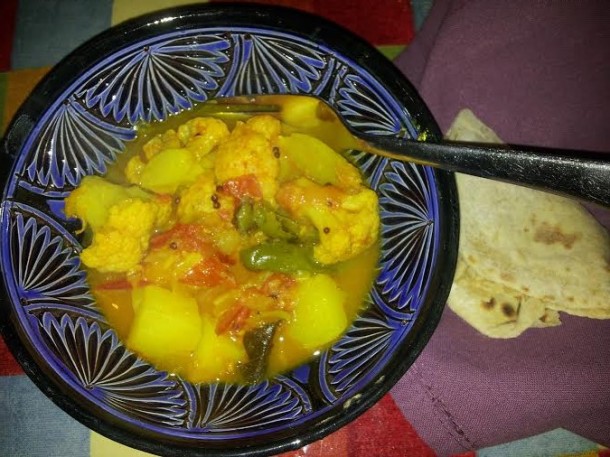
 The cauliflower was used to make to make Aloo Gobi, a curry dish I really like as I love the combination of spicy cauliflower and Potato. The recipe came from ‘The Hairy Bikers, Great Curries’ and although the recipe suggests evaporating most of the liquid, you can see from the photograph that I like mine with some sauce. It can be a meal in itself served with naan bread and raita.

aloo gobi 2

This newsletter recipe for this week is Curly Kale & Cheese Bake. This would be a great accompaniment to meat dishes or as a vegetarian dish with some good crusty bread.

Curly Kale and Cheese Bake

2tbsp oil

1 onion chopped

1 red or green pepper, deseeded and chopped

450g  curly kale

Salt and freshly ground black pepper

175g cheddar cheese

2tbsp Parmesan cheese grated.

Pre heat oven to 180oc /Gas 4

Heat oil in pan, add onion and pepper and cook for about 5 mins.

Add the kale and cook until wilted, about 5 minutes. Season to taste.

Add the cheese, stir well and transfer to a baking dish.

Sprinkle the Parmesan over the top, cover and bake in the oven for about 20 minutes.

Uncover and bake for a further 20 minutes until the cheese is brown and bubbly.

There’s still a few parsnips leftover so depending on what’s in this weeks bag, I might blanche and freeze for roasted parsnips or make a parsnip soup or mash.

Find out more about Bellfield Organics – www.bellfield-organics.com

Filed Under: Vegetarian

The Whole Cow

February 18, 2014 By Rachel 1 Comment

5 cow collage

There’s no shortage of cookery books on my shelves. I own around 200, some are very well thumbed and used regularly, while others are not used that often, but they still deserve a place as  they’ve been a big part of my food journey over the past 30 plus years. I’ve probably cooked something from every book but what  I’ve never done, is cook my way through an entire book.  That’s about to change as one of my cooking projects for this year is to cook my through ‘The Whole Cow’ by Scottish author and consultant chef, Christopher Trotter.  A bit of a Julie and Julia project but hopefully a bit more relaxing on the cooking front.

book

The book was first published in 2013 and Christopher cites it as collection of recipes that celebrate the cow from horn to hoof. There’s plenty of  historical information in the section, ‘A potted history’……… “Beef whether roasted, fried, grilled or simmered in a rich sauce, has been the focal point of feasts from ancient Roman times to the present day. Records of the most splendid banquets come, naturally, from the literate wealthy classes  and it is harder to surmise the diet of the peasant, but – except when times were hard – ordinary people enjoyed roasted meat on special occasions and festivals”.

When I first flicked through ‘The Whole Cow’ , comfort food was what came to mind. The recipes and the pictures just ooze that lovely feeling comfort and warmth, but it is much more than just a collection of recipes. ‘Recipes & lore for beef and veal’ is what it says on the front cover,  and the book is also full of interesting history and stories about beef and cattle.

Cooking with beef is not unusual for me and although I cook a wide variety of different recipes, I have tended to stick with the same cuts of beef, despite having some very good quality Scottish beef farms on my doorstep. When beef is mentioned I always think of comfort food, hearty wholesome casseroles, large roast dinners with gravy and Yorkshire pudding or a big plate of mince and tatties.

For casseroles I love shin of beef. It’s a cheaper cut that requires long slow cooking and it gives  the depth of flavour and texture I want from a beef casserole. We’re  big fans of casseroles in our house, so that’s where I’m starting with this book. Once a dish like this is in the oven, you can relax, the next few hours are your own. Also an ideal meal for the weekend if you want dinner to be ready after an afternoon out with the family.

This shin of beef recipe just oozed of  Winter  flavours, with juniper, ginger, nutmeg, mace and Rowan jelly.  I served it with potato and celeriac mash.

Ingredients collage

Shin of beef with red wine and Rowan jelly.

Serves 4 – 6

2 tbsp butter

2 onions chopped

4 celery stalks, chopped

1kg/ 2 1/4 lb sliced beef shin

1/2 bottle of fruity red wine such as Merlot

2tbsp red wine vinegar

1 tsp ground ginger

1/2 tsp freshly grated nutmeg

1/4 tsp ground mace

10 juniper berries

2 tbsp Rowan jelly

225g/8 oz fresh chanterelles

Salt and pepper

Preheat the oven to 150C/300F/gas2. Heat the butter in a casserole dish over a medium heat and soften the onions and the celery. Dry the meat thoroughly. Heat a heavy bottomed pan, add the olive oil, then brown the meat all over and add to the casserole. Deglaze the pan with a little red wine, then add this wine and all the other ingredients to the casserole. Bring to the boil and season. Cover with a tight fitting lid and put in the oven for 2-2 1/2 hours until tender. Serve with mashed potatoes.

Throughout the book, Christopher has included lots of useful ‘tips’ to help you get the best from the recipes. Here’s the tip for this recipe.

 Tip

Chanterelles and CEOs (porcini are also available dried. For this recipe, you will need about 40g/1 1/2 oz dried mushrooms. Reconstitute them by pouring on boiling water and leaving until cool. Add a little of the soaking liquid to this casserole and use the rest in a risotto.

About the author

Christopher Trotter is a freelance chef and food writer, restaurant inspector and food consultant. As Fife’s Food Ambassador, he organises bespoke food tours around Scotland as well as running cookery classes. He is the author of several books, including the whole hog, Scottish Heritage Food and Cooking with Carol Wilson and the National Trust for Scotland’s The Scottish Kitchen

twitter – @CTScotfood

Facebook – /CTSCOTFOOD

ARTWORK – Thank you to Alice Strange for permission to reproduce the ‘cow’ artwork. A full selection of her work can be viewed at www.alicestrange.com

Filed Under: Meat & Poultry, Recipes

Learn to Cook Authentic Pakistani Punjabi Food

February 12, 2014 By Rachel Leave a Comment

BBC Good Food Show Scotland Bursary Winner 2014. See Yasmin from Scotia Spice at this years BBC Good Food Show Scotland,  17 – 19th October 2014 at Secc Glasgow. This is a post I wrote last year about Yasmin and her bursary winning Punjabi cookery course in a box.

Learn to cook authentic Punjabi food with Yasmin's cookery course in a box.

Learn to cook authentic Punjabi food with Yasmin’s cookery course in a box.

There’s rarely week passes that I don’t cook spicy food and over the years I’ve experimented with lots of different ‘curry’ recipes. Many of the dishes I’ve  cooked are recipes that have been developed for the British palate including the popular restaurant type curry. Lat year,  I met Yasmin McDonagh who runs the cookery school, Scotia Spice, specialising in Pakistani Punjabi cooking, at her home in Balfron.

As well as running the cookery classes , Yasmin designed a ‘ Cookery Course in a Box‘ to share her knowledge, and her family’s authentic Punjabi recipes. Skills and family recipes that had been handed down from her mother and grandmother and like many of us, Yasmin learned by watching them cooking.

With the increasing trend towards eating fast and convenience foods, Yasmin wanted the recipes to be passed onto the younger generation. It’s now a common story in many cultures, traditional skills and recipes being lost as the younger generation are lured away from their heritage and home cooked food towards the chains of restaurants that now dominate our high streets.

It was this passion along with suggestions from students to write a cookery book, that led to her developing the course. Unlike a book, the box contains 6 recipes and all the spices needed for cooking a complete meal. It’s also makes an ideal food gift especially for someone who’s starting to experiment with ‘curry’ as the only extra that’s needed is the meat and the vegetables.

The day we met, I watched and listened as she cooked up three delicious meals from the lamb box and in a very short time, produced some very flavoursome Punjabi dishes. Keema Lamb, potato & spinach pea curry along with a classic cucumber raita, all packed with fantastic flavour.  As she talked about her ‘soul food‘, it was easy to see that this was a woman in love with the food she was cooking. I listened with interest as Yasmin added the spices;  light aromas, top notes, ying & yang, full bodied, mellow, pungent, the characteristics of each spice being described in detail.  It was a fascinating demonstration of alchemy and love, all being cooked up with simple ingredients to make a family meal.COOKING COLLAGEThere was the same passion as she spoke about the recipes and skills she had learned for her mother and grandmother. None of these had been written down, Yasmin learned from watching and listening as they cooked. Simple cooking was what her family did in Pakistan. Originally a peasant farming family, they had few cooking facilities, and needed clever but simple methods to cook over outdoor hearths.

I cooked the meals from the chicken cookery course and was impressed by the simplicity of the recipes, easy to understand and made easier, given that the spices are included with the course.  Despite this  simplicity,  I cooked a chicken curry, that really delivered on flavour,  tandoori chicken, carrot curry,  a red lentil dhal, along with a chutney and a raita. There was no complicated pastes to make, and I particularly liked the easy method of softening the onions along with the other vegetables and spices in water.

Yasmin explained that the six dishes would traditionally be served together as Punjabis eat informally with all the food on the table, allowing the family to help themselves to a good hearty meal.  The food loving Gillon boys gave the complete meal 10/10 and I will certainly cook this again. The combination of dishes would also make a great meal to serve when entertaining as the 6 dishes together make quite an impressive feast.

meal x

There are 3 ‘Cookery Course in a Box‘ to chose from, chicken, lamb or vegetarian, each with a different selection of recipes.

Interested in learning more? There are 3 course options to choose from at Scotia Spice . 

Full day – £130. Start with a spice workshop, learning about the spices and how to use them. Followed by  cooking 6 punjabi recipes which you will take home along with the recipes and a selection of spices.

Half day – £75 Start with a spice workshop and cook 3 Punjabi recipes which you will take home along with a selection of spices.

Introductory session – £30. This session will give you a taste of what Scotia Spice offers. After the spice workshop you will cook one dish which you will take home along with a selection of spices.

Numbers are restricted to 3 on each session, allowing Yasmin to guide you through the practical parts of the session.


Telephone 01360 449399

Filed Under: Meat & Poultry, Products, Reviews

  • « Previous Page
  • 1
  • …
  • 6
  • 7
  • 8
  • 9
  • 10
  • Next Page »

Follow me:

  • Facebook
  • Instagram
  • Twitter

Search

Tags

Chicken Christmas leftovers Comfort Food Edible Flowers Eggs Fish Frittata Herbs Hot smoked salmon Kippers Lamb lasagane Lobster Moroccan Pasta pumpkin Risotto salmon Sausages Scottish Salmon Smoked Fish Smoked Haddock smoked salmon Soup Tagine

Recent Posts

  • Mint – The Essential Summer Herb in the Garden
  • In The Herb Garden – The Calendula Project
  • Herbs and Summer Gardening
  • Scotland’s first Foraging Fortnight
  • Spirit and Spice
  • Springtime in the Garden
  • Love your leftovers this Valentine’s Day
  • Pot Roast Brisket Beef
  • Changing Times
  • Sausage Hotpot

Archives

© 2026, R Gillon | About | Disclosure

This website uses cookies to improve your experience. We'll assume you're ok with this, but you can opt-out if you wish.AcceptReject Read More
Privacy & Cookies Policy

Privacy Overview

This website uses cookies to improve your experience while you navigate through the website. Out of these, the cookies that are categorized as necessary are stored on your browser as they are essential for the working of basic functionalities of the website. We also use third-party cookies that help us analyze and understand how you use this website. These cookies will be stored in your browser only with your consent. You also have the option to opt-out of these cookies. But opting out of some of these cookies may affect your browsing experience.
Necessary
Always Enabled
Necessary cookies are absolutely essential for the website to function properly. This category only includes cookies that ensures basic functionalities and security features of the website. These cookies do not store any personal information.
Non-necessary
Any cookies that may not be particularly necessary for the website to function and is used specifically to collect user personal data via analytics, ads, other embedded contents are termed as non-necessary cookies. It is mandatory to procure user consent prior to running these cookies on your website.
SAVE & ACCEPT